Saturday, January 26, 2013

CUP (2013)


Created: 2013 January 14, with a Holga Camera and 120 mm B/W film (digitized)

Painting Since 1970, Part 1

Today was the fourteenth lecture in the 150 Years of Contemporary Art Lecture Series focusing on Painting Since 1970, Part 1 at the Albright-Knox Art Gallery.

Linda Besemer - Fold #88, 2004
"The news of the death of painting in the 1960s was greatly exaggerated. Since then, painters have taken many paths, developing new approaches and adopting new materials. Artists of the 1970s came up with a variety of ways to reintroduce representational images into art; stories, imagination, and expression were all resurrected by artists such as Neil Jenney, Susan Rothenberg, Anselm Kiefer, and Julian Schnabel. Since then, painters have developed even more new approaches—many of them non-traditional—adopted new materials, and taken painting in many creative and fascinating directions." -source


Next Week: Painting Since 1970, Part 2 (11:15 am - 12:20 pm) 

Sunday, January 20, 2013

Physical Fact/Fleeting Idea: Minimalism and Conceptual Art

Yesterday was the thirteenth lecture in the 150 Years of Contemporary Art Lecture Series focusing on Physical Fact/Fleeting Idea: Minimalism and Conceptual Art at the Albright-Knox Art Gallery.

Sol LeWitt
Maquette for proposed installation at Albright-Knox Art Gallery
2005–06
"What can you eliminate from sculpture and painting and have it still be art? Is it possible for a work of art to refer to nothing but itself? Must an artist use his or her own hands to make an artwork? Which is more important: the object or the idea? Come and view the results of this debate through the work of artists such as Donald Judd, Carl Andre, Sol LeWitt, Robert Morris, Agnes Martin, and Robert Mangold, who pondered these very questions in the 1960s and 1970s."-source 
Next Week: Painting Since 1970, Part 1 (11:15 am - 12:20pm)

Sunday, January 13, 2013

10 Minute Presentations


HERE + NOW MEDIA ARTIST SHOWCASE

presented in collaboration w/ Emerging Practices at UB

FRI., JAN. 25TH @ 7:00 PM       LOCATION: SQUEAKY WHEEL"Join us for an evening with seven Western New York-based artists who incorporate media art into their practice. See their work and exchange ideas. Consider this a more in-depth take on Pecha Kucha Nights, featuring  10-minute art presentations by Alex Derwick, Bobby Gryznger, Eliseo Ortiz, Byron Rich + Heather Brand, Liz Rywelski, and You Qi. This event is free and open to the public.
This event is organized in part by Emerging Practices (EP) at the University at Buffalo, a joint research, theory, and critical initiative bridging graduate students in the departments of Media Study and Visual Studies to explore the technical, tactical, cultural and communicative potential of emerging technologies in such domains as interactive multi-media, robotics, simulation systems, computational media, biotechnology, and image synthesis." -source

The 1960s: Soup Cans, Comic Books, Optical Illusions, and POPular Culture

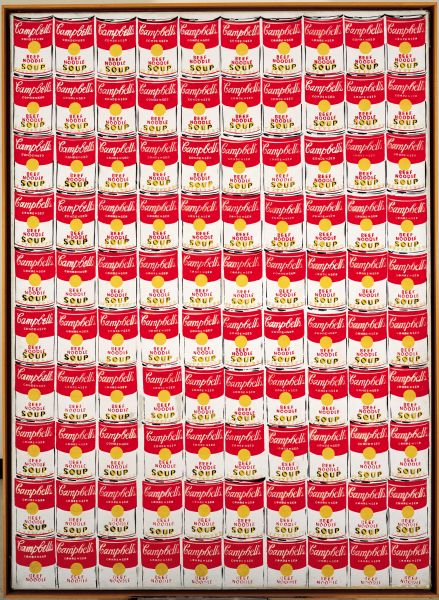
Yesterday was the twelfth lecture in the 150 Years of Contemporary Art Lecture Series focusing on The 1960s: Soup Cans, Comic Books, Optical Illusions, and POPular Culture at the Albright-Knox Art Gallery.

Andy Warhol - 100 Cans, 1962
"As American youths challenged their elders by protesting the Vietnam War and established cultural traditions, young artists confounded their elders’ traditions by making art from stuffed animals, bronze beer cans, electric chairs, dizzying spirals, Marilyn Monroe, stars and stripes, Mickey Mouse, George Washington and Simon Bolivar, plaster of Paris, altered pianos, tires and ladders, and more. Attendees will relive many aspects of the 1960s in the work of artists such as Andy Warhol, James Rosenquist, and Roy Lichtenstein." -source


Next Week: Physical Fact/Fleeting Idea: Minimalism and Conceptual Art (11:15 am - 12:20 pm) 

Friday, January 04, 2013

When the Art World Came to New York: Abstract Expressionism

Tomorrow is the eleventh lecture in the 150 Years of Contemporary Art Lecture Series focusing on When the Art World Came to New York: Abstract Expressionism at the Albright-Knox Art Gallery.

Jackson Pollock - Convergence, 1952
"At the end of World War II, with its death, destruction, and the resulting knowledge that mankind now had the ability to destroy itself with atomic weapons, American artists felt that representational art could no longer adequately express the mood of the times. Jackson Pollock, Mark Rothko, Willem de Kooning, Robert Motherwell, and the artists who would become known as the Abstract Expressionists looked inside themselves and into the distant past to create a new way of painting that shifted the center of the art world from Paris to New York." -source


Next week: The 1960s: Soup Cans, Comic Books, Optical Illusions, and Popular Culture (11:15 am - 12:20 pm)

Screening: TONIGHT!


AK CONTEMPORARY: AI WEIWEI

Albright-Knox Art Gallery, Buffalo, NY

FREE for Members
$5 for non-members
Auditorium

Lecture: “Art and Politics: A Look at Ai Weiwei”
With Assistant Curator of Education Jessica DiPalma @ 7:30 pm

Film: Ai Weiwei: Never Sorry, 2012 @ 8 pm
"Named by ArtReview as the most powerful artist in the world, Ai Weiwei is China’s most celebrated contemporary artist and its most outspoken domestic critic. In April 2011, when Ai disappeared into police custody for three months, he quickly became China’s most famous missing person, having first risen to international prominence in 2008 after helping design Beijing’s iconic Bird’s Nest Olympic Stadium and then publicly denouncing the Games as party propaganda. Since then, Ai’s critiques of China’s repressive regime have ranged from playful photographs of his raised middle finger in front of Tianamen Square to searing memorials of the more than 5,000 schoolchildren who died in shoddy government construction in the 2008 Sichuan earthquake. Against a backdrop of strict censorship, Ai has become a kind of Internet champion. Through his frequent, witty use of his blog and Twitter, he is able to organize, inform, and inspire his followers, becoming an underground hero to millions of Chinese citizens.
First-time director Alison Klayman gained unprecedented access to the charismatic artist, as well as his family and others close to him, while working as a journalist in Beijing. In the years she filmed, government authorities shut down Ai’s blog, beat him up, bulldozed his newly built studio, and held him in secret detention, while TIMEmagazine named him a runner-up for 2011’s Person of the Year. This compelling documentary is the inside story of a passionate dissident for the digital age who inspires global audiences and blurs the boundaries of art and politics." -source

[Note: If you cannot make the screening, the film is on Netflix]